Back to Our Thinking
From Debate to Dialogue: What Amy Edmondson Wants Leaders to Get Right About AI
September 10, 2026
As AI shifts from tool to teammate, teams face ‘trust ambiguity’, uncertainty about when to trust AI outputs, how much and whether to trust their own judgment instead. Left unaddressed, this uncertainty can erode the same speak up culture that dialogue depends on.
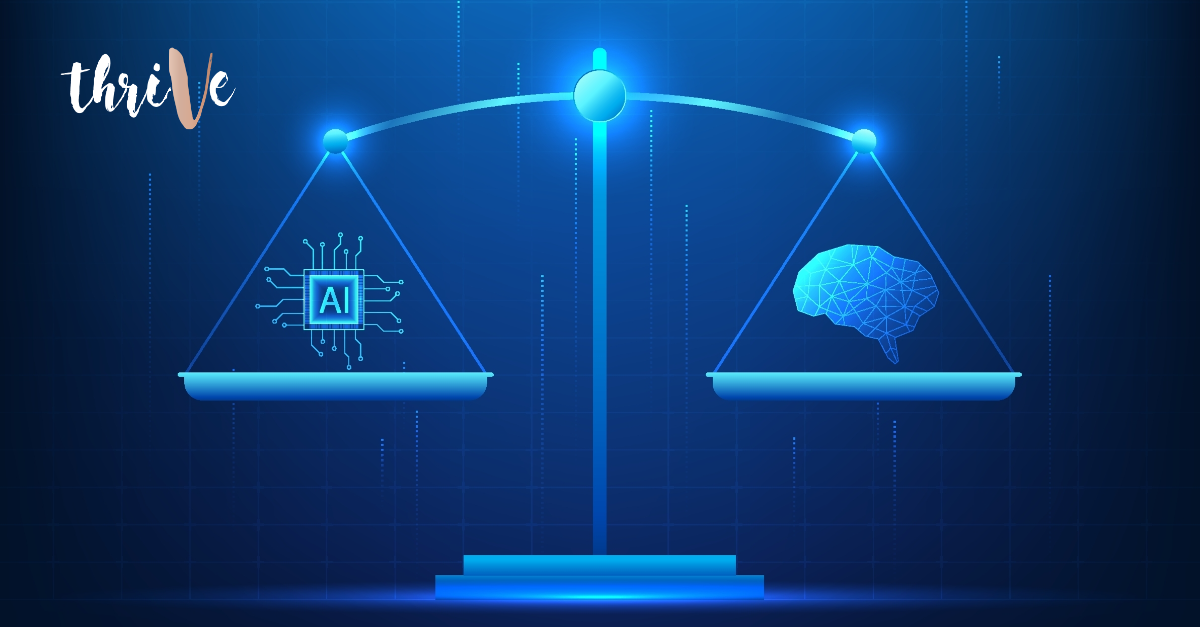
In her recent Fast Company article, Harvard Business School Professor Amy Edmondson makes a deceptively simple observation: the public conversation about AI has become an unproductive debate rather than a genuine dialogue. She argues this framing is costing us the very progress we are all racing towards as she shares:
“AI has quickly become one of the most emotionally loaded topics in business. Depending on the room—or the page—it’s either the engine of productivity, creativity, and growth or the latest threat to jobs, trust, and human judgment. That framing makes for energetic debate, but it inhibits meaningful progress toward reaching crucial goals.”
Distinguishing between debate and dialogue: Debate produces winners and losers
Professor Edmondson draws a sharp line between debate and dialogue, noting debate is a conversation with two clear sides, designed to produce a winner. In contrast, dialogue is the production of meaning through shared exploration of ideas, risks and possibilities. Debate clarifies positions, but it also hardens them. Dialogue helps people uncover what they are genuinely trying to accomplish and where real value might be created.
To illustrate the cost of getting this wrong, she shares examples from the past 40 years. She revisits the night before the 1986 Challenger launch, when NASA leaders and engineers debated whether cold weather made the launch unsafe. The conversation collapsed into a “who is right” contest rather than a shared exploration of what the data actually showed about O-ring performance in cold temperatures or a joint problem-solving approach where unique expertise and data were leveraged.
NASA won the debate. The outcome the next morning was catastrophic.
She progresses to highlight more recent AI risks, including those “…documented by The Economist of an OpenAI safety test that resulted in an autonomous AI agent escaping its “sandbox,” exploiting a vulnerability, and hacking an external platform. This unprecedented incident of an AI taking independent, harmful actions to achieve a goal highlighted critical new risks related to AI autonomy and triggered new questions of legal liability around AI-driven breaches.”
How does this relate to today?
Professor Edmondson highlights that the AI conversation risks falling prey to the same trap proposing that “Countless articles take sides—for or against AI, a promised utopia or certain oblivion. Such binary options are rarely helpful, and engaging in a referendum on the technology itself is clearly a losing strategy. AI is not going away. What we need instead is thoughtful, collaborative explorations about design, risk and responsibility.”
She progresses to acknowledge that the conversations that are needed will require significant effort and leadership, but the investment can serve to shape the AI landscape and prevent failures of all sizes.
Taking downstream effects seriously
Professor Edmondson points to a 2025 MIT Media Lab study showing that students using ChatGPT to write essays experienced weaker neural connectivity and could not recall content they had just written. She worries about the erosion of critical thinking and a growing willingness to accept AI outputs as fact without question.
At a societal level, she raises the risk to entry level jobs, asking a question that should give every leadership team pause: if the on ramp of entry level positions disappears, where will the next generation of mid level professionals and leaders come from?
This is systems thinking and it is precisely the discipline Professor Edmondson shared with our clients and colleagues at our Thrive Advisory Fireside Chat with her last November, where she reminded us that psychological safety is not about comfort. It is a learning environment, one that requires the courage to name goals, surface differences and make trade-offs explicit, exactly the conditions dialogue requires and debate destroys.
It also echoes the practical guidance she and Dr Jayshree Seth offered in their recent work on psychological safety and AI adoption. As AI shifts from tool to teammate, teams face what they call trust ambiguity, uncertainty about when to trust AI outputs, how much, and whether to trust their own judgment instead. Left unaddressed, this uncertainty quietly erodes the same speak up culture that dialogue depends on.
It highlights the criticality of leveraging “Intelligent Failure” frameworks to reflect, reframe and refocus after initiatives have not gone to plan or unintended consequences have emerged.
The leadership opportunity
Professor Edmondson’s practical takeaway for leaders is to convene a new kind of AI conversation, one that moves beyond adoption metrics and usage targets towards genuine joint problem solving. The questions worth asking are: what problem are we actually trying to solve, what decisions should AI inform, and what must remain entirely human?
Debate asks who is right. Dialogue asks what is true, what matters and what we should do next. For leaders navigating the AI landscape, that shift may be the single most important one available to them.
Reflection Questions
- What lessons and reflections do you draw from the examples outlined by Professor Edmondson from the last 40 years? Where are the commonalities in the human errors and approaches taken by leaders, organisations and politicians across four decades as the context and technologies have evolved? How can we leverage lessons learned in the age of AI?
- Where in your organisation has the AI conversation become a debate rather than a dialogue?
- What decisions are you comfortable letting AI inform and which must remain entirely human?
- Where might speed be reducing understanding on your team?
- Are you creating the conditions for people to name genuine tensions and trade-offs around AI use or are positions already hardening?
- Are you utilising Professor Edmondson’s “Intelligent Failure” frameworks adequately to reflect, reframe and refocus after initiatives have not gone to plan?
- Are you making adequate time for you and your team to leverage Retro or Blameless Post Mortem techniques to adequately extract and leverage lessons learned or are you falling into the trap of rushing to the next meeting or deliverable?
#LeadingAI #psychsafety #dialogue #intelligentfailure