Back to Our Thinking
The Age of AI is heightening the criticality of Leadership, Teaming and Psychological Safety
February 10, 2026
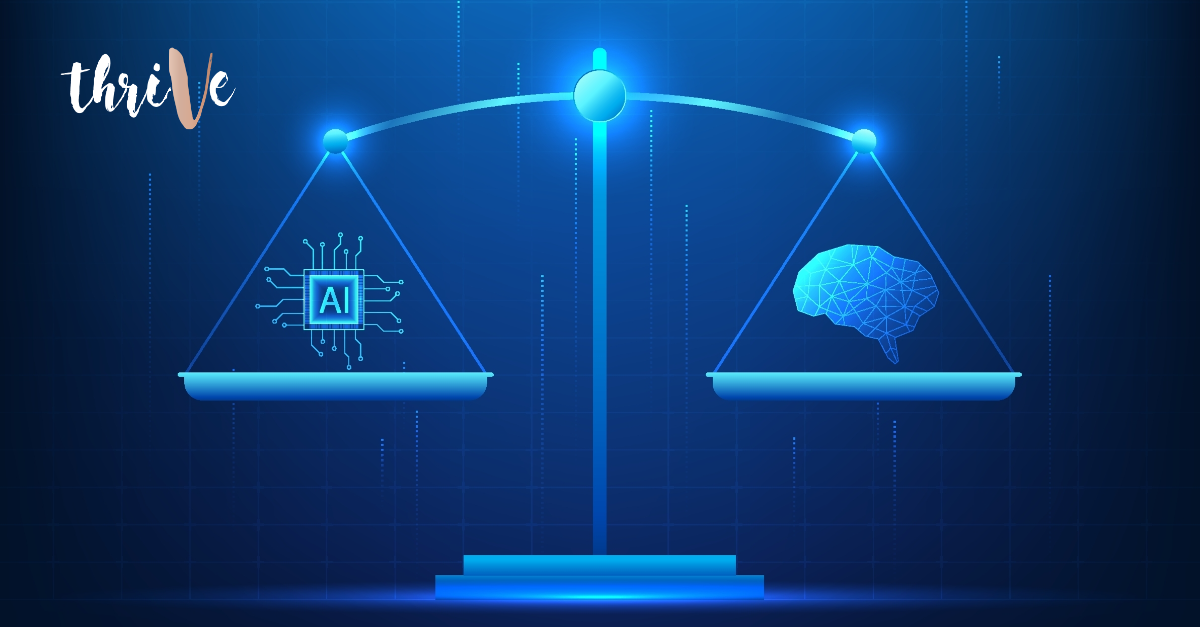
As the pace and expectations related to AI adoption continue to accelerate, we have been increasingly hearing from diverse global thought leaders about the perils of speedy adoption and inadequate design and implementation. Amidst the race to adopt AI to maintain competitive edge and drive productivity gains, we are hearing about and witnessing common organisational pitfalls – an over-focus on technology while under-estimating the focus on leadership, teaming and cultural transformation for sustained performance and the ethical integration of AI. Both technologists and leadership gurus are opining that for leadership teams, the challenge is not just implementing AI. It involves critical leadership, culture and teaming and the maintenance of human trust and collective confidence during transformation.
At the Chief Executive Women Leadership Conference in October last year, AI Transformation Advisor and Singularity University Professor Dr. Kellie Nuttall asserted that the technological elements of AI have been over-emphasised and that the role of leadership has been under-played to date. Citing examples from her partnerships with global C-suite executives to support AI adoption and transformation, she argued “leadership is the most important thing to getting this right. It’s not the technology. The technology is great. It’s getting better all the time. It’s the worst it’s ever going to be! What is actually predicting AI succeeding and failing in organisations is how you drive adoption and how you make workforce decisions.”
In their hot-off-the-presses article (How to Foster Psychological Safety When AI Erodes Trust on Your Team) Harvard Business School Professor Amy Edmondson and her co-author Dr. Jayshree Sethexplore how AI adoption can unintentionally undermine confidence, relationships and collaboration if leaders do not proactively shape how teams work alongside technology.
They argue that while AI promises efficiency and insight, it also introduces ambiguity, trust erosion and other team challenges where team members may question the reliability of outputs, feel uncertain about their own value or worry about how performance is evaluated. When these dynamics are left unaddressed, psychological safety can decline and learning behaviours can slow.
In summaries of their research, they define trust as “the currency of collaboration” that is integral to human-AI teaming. When AI moves from “tool to teammate”, it can create a new problem they define as “trust ambiguity,” where teams:
- Do not know when to trust AI outputs,
- How much to trust them, or
- Whether to trust their own judgment.
In contrast to human errors which when surfaced get highlighted and metabolised through team Retros and Blameless Post Mortems, AI errors can create expanding circles of doubt that may have no clear path to resolution.
Leveraging Professor Amy Edmondson’s frameworks on psychological safety (how teams speak up), teaming (how fluid collaboration works) and intelligent failure (how to learn from the right mistakes) they offer a set of leadership practices to support teams navigate uncertainty and build genuine human-AI collaboration.
They call attention to the rise in “workslop” (they define as AI-generated output that fails to move a project forward and dumps extra cognitive and emotional labour on colleagues who must fix or redo it). They argue this not only harms productivity but damages trust between coworkers. The prevalence of “workslop” is alarming, as highlighted by another recent HBR article published citing research by Stanford University Professor Jeffrey Hancock. Of the 1,150 U.S.-based full-time employees across industries who participated in the survey:
- 41% recalled receiving a specific instance of workslop that affected their work.
- More than half of respondents admitted to sendingworkslop to colleagues.
- One in 10 admitted that 50% or more of the AI-generated work they sent colleagues was “actually unhelpful, low effort or low quality.”
Professor Edmondson and Dr. Seth argue that most leaders do not consider or treat these issues as the team integration challenges they are stating “They may treat them as technology problems to be solved with better tools or training, rather than team effectiveness issues that require many of the principles we know work for human collaboration.” Their article highlights several emerging patterns:
- Unclear accountability creates hesitation When AI contributes to decisions or outputs, teams may struggle to understand who is responsible. This ambiguity can discourage risk taking and reduce open dialogue.
- Expertise hierarchies shift AI tools can change who holds knowledge or influence. Experienced employees may feel displaced while newer or more digitally fluent team members gain visibility. Without thoughtful leadership, this can create tension rather than learning.
- Fear of judgment increases Employees may worry that mistakes made with AI tools reflect poorly on their capability. This can lead to experimentation avoidance, exactly the opposite of what organisations need during innovation cycles.
- Trust moves from people to systems Over reliance on AI outputs or scepticism toward them can both disrupt collaboration. Teams need shared norms for questioning, validating and integrating AI insights.
The Leadership Opportunity
Professor Edmondson has asserted for decades that psychological safety is not about removing discomfort. Rather, it is about creating conditions where people feel safe to speak up, challenge assumptions and learn together even when uncertainty is high. In this article, she and her co-author propose that leaders play a critical role in setting these conditions during AI adoption recommending the following key leadership practices:
- Modelling curiosity, fallibility and learning Leaders who openly explore AI tools, admit uncertainty and share their own mistakes, knowledge gaps and learning journeys signal that experimentation is expected and supported.
- Leveraging intelligent failure protocols Reframing AI integration as a learning process, not an execution process and treating early AI “mistakes” as learning opportunities that serve to calibrate expectations and develop better collaboration protocols.
- Clarifying decision ownership Teams need clear understanding of when AI informs decisions and when human judgment leads. Explicit frameworks can serve to reduce confusion and increase confidence.
- Normalising questioning AI outputs Encouraging healthy scepticism ensures teams engage critically rather than blindly trusting or dismissing technology.
- Creating shared learning rituals Implementing regular reflection (via Retros or Blameless Post Mortems) discussing what has worked, what has not and what surprised the team can build collective capability and reinforce psychological safety.
- Reinforcing human value and focusing on team-level thriving AI should be positioned as augmenting human capability rather than replacing it. Leaders must actively recognise uniquely human strengths such as judgment, empathy and context awareness.
- Broadening the definition of success AI integration success metrics must be redefined to go beyond AI performance metrics and incorporate:
- Team effectiveness measures
- Learning velocity
- The ability to leverage both human and artificial intelligence optimally.
The key article tenets underscore and extend key messages Professor Edmondson shared with the Thrive Advisory team and our clients in Sydney last November when we asked for her insights and advice to leaders related to the promises and perils of AI. She shared the following insights and advice:
- On average, AI is creating a lot of anxiety. This generalised anxiety is making people nervous and resulting in smaller/lesser risk taking.
- AI is reducing team communication and resulting team dynamics challenges, citing a study where engineers who used AI more extensively communicated less with their colleagues. As a result, AI is negatively impacting the quality of conversations and connections with human colleagues.
- Moments of connection between colleagues and therefore team bonds are being lost when team members rely on AI for help instead of one another, leading to a key concern that AI will “drive us more into loneliness rather than into connection.”
To mitigate these risks, Professor Edmondson urged us to consider and design team-level processes and integration more deliberately with advice to:
- Step into discussions about the anxiety being experienced – from interpersonal anxiety related to AI knowledge to generalised anxiety about which aspects of jobs are going to be replaced by AI.
- Deliberately override these anxieties and risks by leveraging and learning about AI at the team-level, making it “a team sport rather than a solo sport”, seeking to stress test specific types of technology as a team.
- Engage in this AI / team adoption journey in a learning-oriented way by designing processes and “experiments” together with colleagues to see what works and what is possible.
- Consider ways to leverage AI (and experience the upside of how AI can take the “friction out of life and work”) while seeking to “become more skilful and stronger, not less skilful and lazier.”
What This Means for Leaders Now
The Thrive Advisory have been relishing the provocations offered by Professor Edmondson in person and in this article and the manner in which her scholarship has linked some of the most critical challenges and opportunities our clients are facing. We couldn’t agree more that these types of reframing and reconceptualisation are critical.
- AI adoption is not simply a technology transformation. It involves and requires key leadership, cultural and relational shifts.
- Leaders who focus only on technology and tools risk overlooking the trust dynamics that determine whether teams actually use them effectively.
- As AI continues to transform organisations, the leaders who succeed will be those who invest in technological capability and leadership and teaming simultaneously and equally. While AI will reshape how work happens, trust will remain the foundation of performance. Leaders who intentionally design psychological safety during AI adoption will unlock faster learning, stronger collaboration and more sustainable innovation.
- Psychological safety becomes even more important when uncertainty increases. Teams must feel safe to experiment, challenge outputs and surface concerns early.
- The most effective organisations will treat AI implementation as a leadership capability challenge rather than a purely technical rollout.
If these assertations resonate, we encourage you to consider the following reflection questions:
- How comfortable does your team feel questioning AI generated insights or recommendations?
- Do people understand when AI informs decisions versus when humans decide?
- Where might uncertainty about AI be creating silent hesitation rather than open discussion?
- Are you modelling curiosity and learning adequately or projecting certainty?
- In what ways could you leverage elements of these team-level practices and rituals to drive both AI adoption and team effectiveness?
- How are you reinforcing the uniquely human contributions your team brings?
- How will you role model these leadership practices this week?