The Power of Parenting: The Impact of Michelle Obama’s Hope, Humanity, Humility and Hugs! Part 1
August 5, 2026
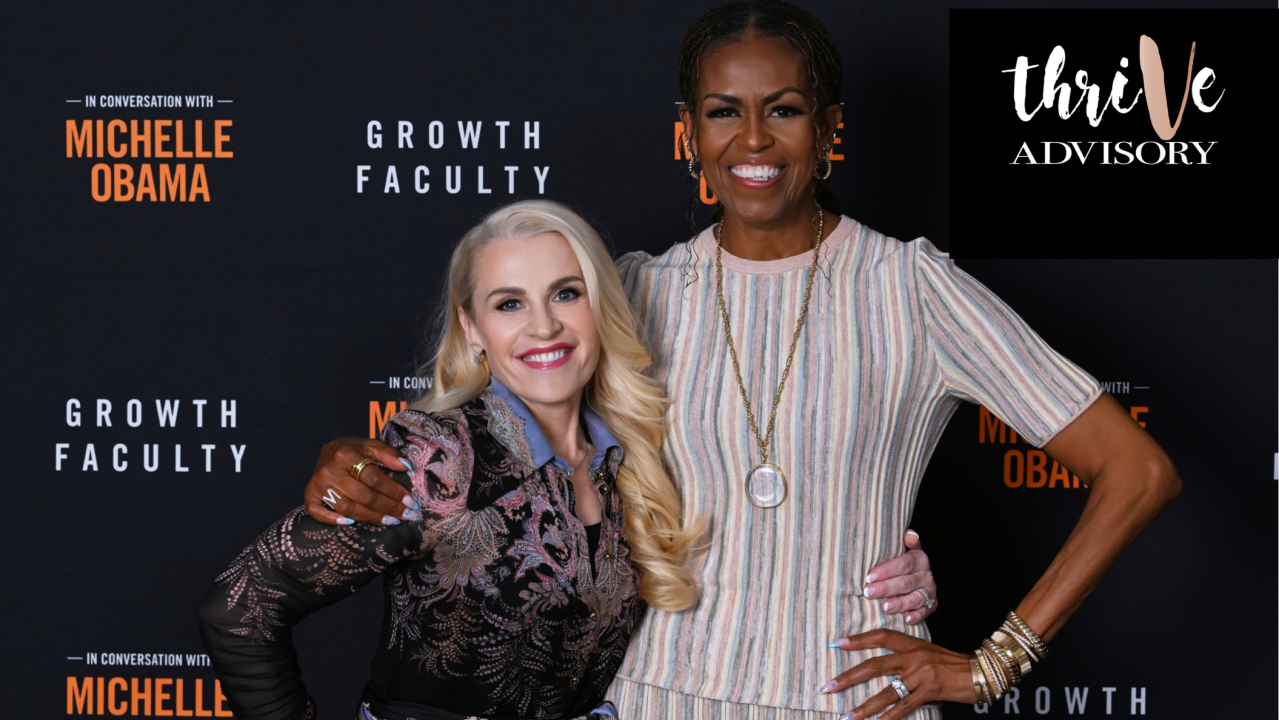
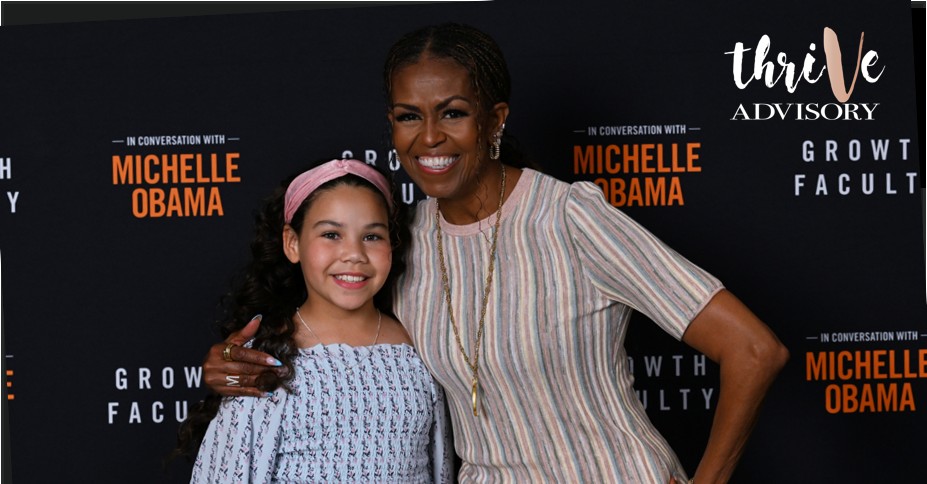
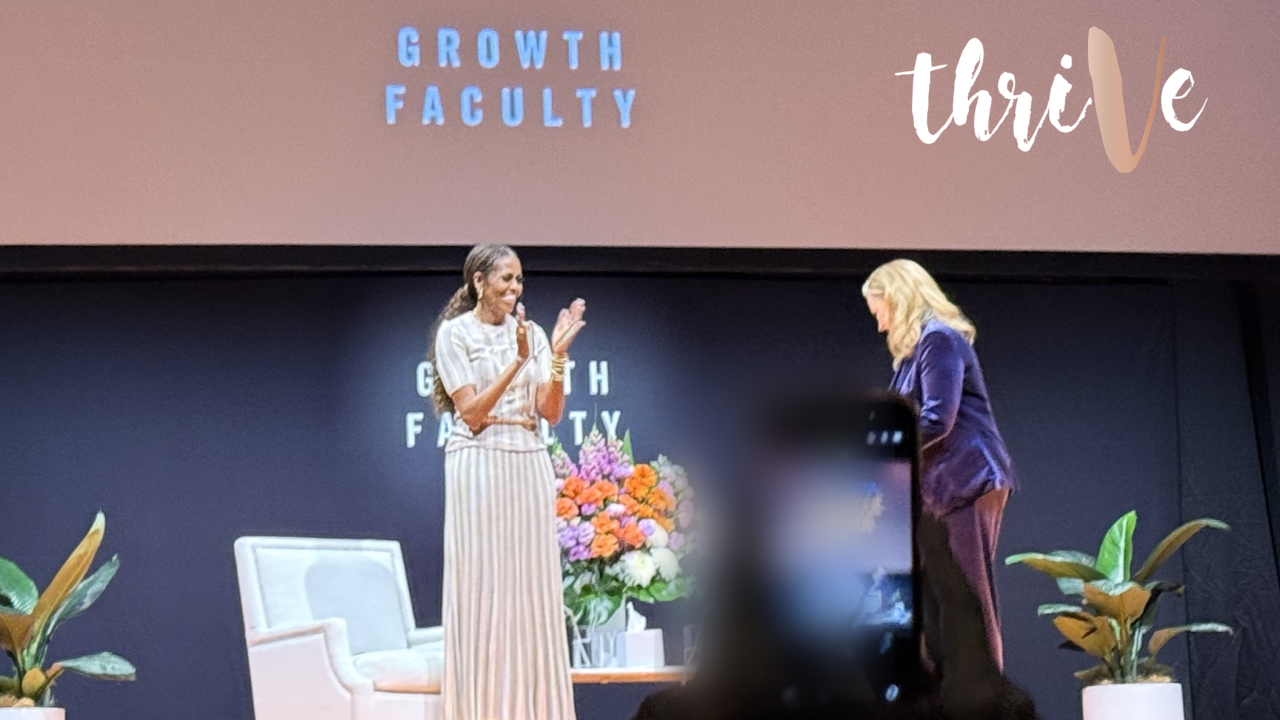
In a huge departure from my usual LinkedIn posts, I want to share quite a profoundly personal experience and the reflections and lessons that have felt applicable across my parental and professional roles. It is not often that you get to create an experience for your child that you are 100% sure they will remember for the rest of their life. I had the thrill of planning this kind of experience for my 8-year old daughter Alva when former FLOTUS Michelle Obama’s visit to Australia was confirmed and we had the privilege and honour of meeting her after her Fireside Chat. To say she left a lasting impression would be the understatement of the century!
This is the second article drawing on Michelle Obama’s Sydney sessions. Where Article 1 explored fear and competence – and the systemic forces that can serve to sow seeds of self-doubt, particularly in women, this piece turns to the question underneath: where does self-belief come from? And what is our responsibility, as leaders, parents and as people, to kindle it in others? The impact of the manner in which Michelle Obama engaged with me and my family was immeasurable and almost indescribable (but I will try to capture!). She was the personification of humanity, heart and hope. She embodied and underscored so many of the anecdotes and advice she shared in her Fireside Chat in our interactions. This will need to be a two-part article as I have far too much to convey about this topic and what it has meant to me personally and professionally!
The Power of Parenting: Michelle Obama’s Mother’s Lasting Legacy
She wasn’t raising children. She was raising human beings.
When Michelle described her mother’s parenting philosophy, the room went very quiet. Marian Robinson, she explained, operated from a foundational conviction: that her job was not to produce compliant, managed children, but to grow capable, self-determining human beings. The distinction sounds subtle, however the distinction seems significant and implications can be enormous.
“Trust the voices in their heads. I think there are a lot of people who are aware very young in life – I have memories of understanding my capabilities as early as four years old. If you feel that in yourself, trust it. And then you have to find people who believe in it. Maybe it’s not your parent. Maybe it’s a teacher. Somewhere in a school there are men and women looking for that light in a child.”
– Michelle Obama, Sydney, May 2026
What Marian Robinson gave her daughter was not resources, connections or a prestigious education. She gave her something more rare and more transferable: the experience of her own agency. The belief, grounded in repeated evidence, that she could be trusted with her own life.
The kitchen table: where everything was discussable
The image Michelle returned to repeatedly during the Fireside Chat was the kitchen table in the small South Side house where she grew up. It is where the Robinson family talked about everything, at length, with honesty and without condescension.
“We were a household full of conversation. That kitchen table in that little house – as my mother was preparing dinner, we would sit and talk for hours about everything and anything. Nothing was off the table. They explained the world to us at that table. They told us what made people who they were. What made them afraid.”
– Michelle Obama, Sydney, May 2026
This included the hard things. Michelle described how her parents gave her and her brother Craig Robinson context for the fear and limitation they witnessed in others including key family members whose lives had been impacted and constricted by segregation and racism. Rather than shielding their children from core elements of these experiences, the Robinsons named it. They gave it context. They distinguished between the fears that were inherited and the possibilities that could be available to Michelle and Craig.
It is a model of candour that most parents, leaders and organisations aspire to and very few achieve. The psychological safety literature – including the work of Harvard Business School Professor Amy Edmondson, with whom we have had the privilege of working with last year – tells us that teams and cultures where difficult truths can be named and discussed are measurably more innovative, more resilient and more capable of learning. The Robinson kitchen table was, in this sense, a masterclass in what a speak-up culture looks and feels like from the inside, from the early years and what it can inspire, ignite and achieve.
In her book Becoming, Michelle writes about this with characteristic clarity: “My mother’s genius, I think, was in understanding that I needed to find my own way. She was giving me the room to do that.” The genius, as Michelle described it in Sydney, was also in what her mother did not do – she did not rescue, manage or over-interpret. She listened, believed and stepped back. This reminded us of Professor Amy Edmondson’s advice on parenting last November, captured in this article, highlighting the parental risk of and the manner in which we can inadvertently rob our children of critical life lessons and learnings, with this key excerpt from our key takeaways article:
“As parents, with the intent to protect our children from the pain and disappointment associated with failure, we inadvertently rob our children of invaluable lessons that build character and resilience. Beyond the boundaries of our organisational roles, we found time to discuss how her scholarship applies to parenthood. Featuring insights from her Scientific American article published earlier this year, titled Letting Kids Fail Is Crucial, Professor Edmondson emphasised and empathised regarding how our protective instincts can kick in, sharing “Number one, these are instincts coming from love. We want to protect our kids as we don’t want them to experience failure” but progressed to describe how failure is a really important part of life and how we must try to catch ourselves in the natural, loving desire to get out ahead of the failure to not let them experience it to avoid acting on this instinct. She urged us to consider how our children must experience failure early in life. She distinguished this from protecting our children from physical threats, reminding us that “part of the job of a parent is to protect your kids from real harm and danger, but not from discomfort…they need to experience discomfort.”
She shared the impact of being overly sheltered from discomfort, “Parents with the best of intentions, will often do helicoptering, with the result that they’re making their children more risk averse, more fragile and ultimately more unsure in a way they didn’t intend at all.” Offering an antidote, Professor Edmondson highlighted the work of Professor Carol Dweck on growth mindset and advised us to focus on process versus results when praising our children, emphasising how important process and effort are and highlighting that we can all learn to progress on different goals and abilities. These diverse examples related to our responsibilities to support learning and growth are potent reminders and reframes for us all while acknowledging the challenges in choosing comfort over candour.”
Belief is the most powerful thing any parent – or leader – can give
At one point in the conversation, Michelle turned directly to the question of what parents who lack resources, education or connections can offer their children. Her answer was one of the most quietly profound and powerful moments of the evening.
“What my parents gave me was something that any parent can give their kids. It’s a belief in your child’s voice. The importance of who they are in their home. How they looked at us, how they laughed at our jokes, how they asked our opinions, how they buttressed us through hard times. You don’t need to give them stuff. You just need to give them a sense that you think they’re capable…that you trust their judgment.” – Michelle Obama, Sydney, May 2026
Her father was a city worker with multiple sclerosis. Her mother was a stay-at-home parent who did not begin working as a secretary until Michelle reached high school. By any conventional measure of advantage, the Robinsons had less to offer than many of the parents of the peers that Michelle described she progressed to study and work alongside. And yet what they provided – radical belief, consistent presence, the experience of being heard and trusted – produced and shaped one of the most consequential women of our era.
Every child comes into the world with a flame
One of the most arresting images Michelle offered was this: that every child enters the world carrying a flame. That flame embodies ability, hope, a voice and common sense. The question is simply what the adults around them do with it.
“We can blow air into that flame of possibility, or we can snuff it out. But every kid comes into this world with a flame. And either adults believe in that and carry it forward – teaching that child how to harness that power – or they step all over it and crush a child.”
– Michelle Obama, Sydney, May 2026
She made this point not as an abstraction but with the specificity of lived experience. In second grade, she found herself in a classroom that felt chaotic with a teacher whose capacity Michelle questioned. She came home and told her mother about her concerns. Her mother listened, believed her and followed up with the school to understand more about the context of the classroom. Michelle described how her mother acted to ensure her daughter was moved to a class where she could be appropriately stretched and supported. Michelle described how did not know at the time what her mother had done or said. What she did know (as a 7 or 8 year old at the time) was that her instincts had been right, that her observations and needs had been taken seriously and that something real had happened as a result. “That kind of little stuff stays with a child,” she shared. “It certainly stayed with me long enough that I would call it, as I’m writing my memoir, a really fundamental thing that gave me a sense of ability.”
The lesson she drew from it is one we would all do well to contemplate deeply: the adults in children’s – and employees’ – lives “can lift a kid up, blow air into that flame of possibility. Or they can snuff it out.” The responsibility is not neutral. It never was.
When the flame is not kindled at home: finding it anyway
Michelle was asked what she would say to those who did not have the kitchen table she had – who grew up without parents who believed in them, who perhaps had their flame stepped on rather than fanned. Her answer was generous but unsentimental.
“Trust the voices in their heads. I think there are a lot of people who are aware very young in life – I have memories of understanding my capabilities as early as four years old. If you feel that in yourself, trust it. And then you have to find people who believe in it. Maybe it’s not your parent. Maybe it’s a teacher. Somewhere in a school there are men and women looking for that light in a child.”
– Michelle Obama, Sydney, May 2026
She was clear that this should not be a burden children carry alone – that we should live in a world where every child is invested in regardless. But in the world we actually inhabit, her counsel is practical and urgent: show up, be seen, do the work that makes you visible to the people who are looking for you.
The flame Michelle Obama’s parents protected and fanned in a small house on the South Side of Chicago lit up the room and inspired me alongside thousands of others in Sydney in May. It is a reminder that belief is not a nice-to-have. It can be the whole thing. Most importantly, it serves as a potent reminder that every one of us – as parents, as leaders and as the adults in other people’s stories – gets to decide every single day what we can do to support and nurture self-belief among other countless gifts within the flames in front of us.
In Part 2, we will pick this thread up and discuss implications for the personal and professional spheres of our lives and the profoundly personal and impactful experience Alva and I when we met Michelle after the event. In the meantime, we invite you to consider a few of these questions:
What Resonates?
Which of Michelle Obama’s family rituals, her mother’s mantras and anecdotes resonate most with you? Why?
What lesson or action could flow from this resonance?
What would you like to replicate with your loved ones and the younger “flames” in your life across family, friendship groups, sporting, cultural and community (and the countless other relevant) settings?
Reflections and Reminders
Who in your life blew air into your flame?
What did they do that made the difference?
What did that mean to you at the time?
How did their actions benefit you and shape your life?
Where, across your life or career now, might you need to remember or re-channel their words and belief in you?