Back to Our Thinking
Intent vs Impact: Unlocking Growth by Building Psychological Safety and Failing Intelligently
November 18, 2025
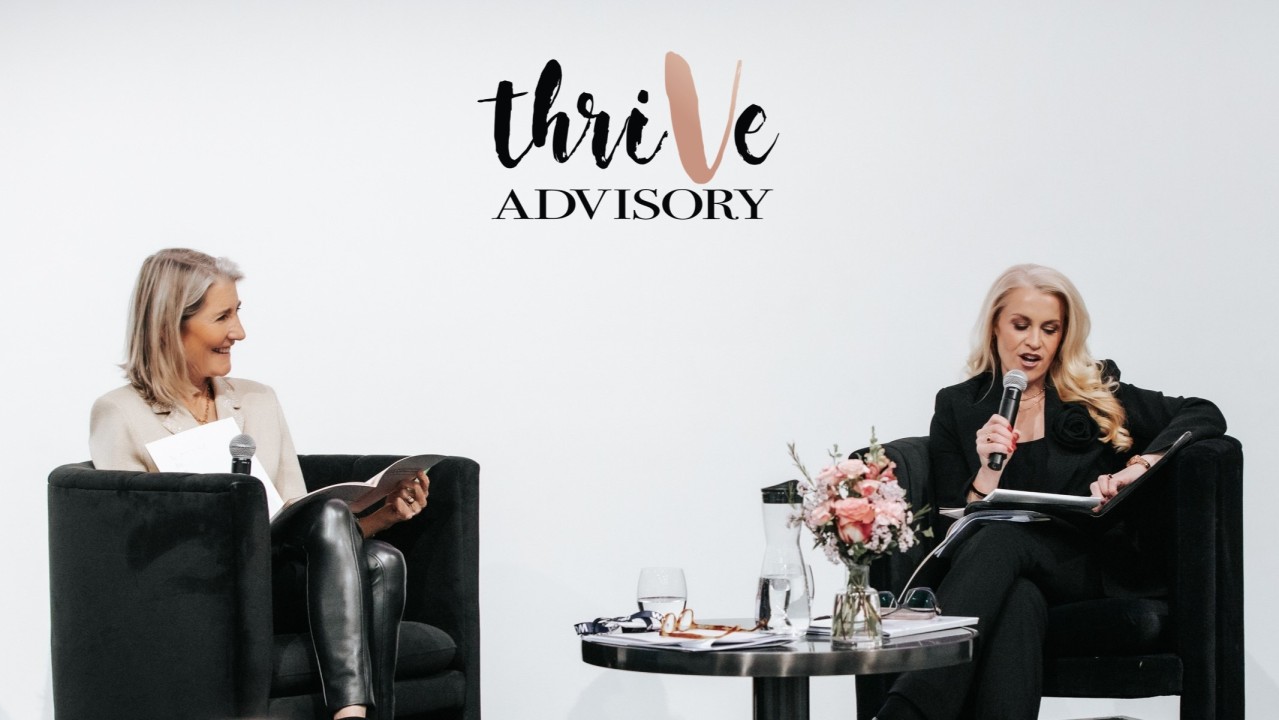
Harvard Business School Professor Amy Edmondson joined us last week for an inspirational session on Unlocking Growth by Building Psychological Safety and Failing Intelligently. Brilliant, warm, authentic and agile, she shared endless research overviews, pithy insights, memorable quotes and a host of pragmatic application ideas. Leaders, teams, organisations and Board Directors can leverage this thinking to unlock growth and drive sustainable performance by focusing on building a speak-up culture, iterative innovation and learning to fail well.
Representing a much-needed bridge across the academic vs practitioner divide, she personified our Thrive Advisory aspiration of “Rigour and Relevance”, bringing insights from decades of her rigorous research and quest for knowledge with deep insights and practical tips, making for a highly relevant session for our each and every one of our guests, no matter their role or industry.
In an absolute personal and professional pinnacle (a.k.a., pinch me moment squared!), I had the honour of interviewing Professor Edmondson during our Fireside Chat, drawing from the questions submitted by our clients and team members, many rooted in diverse internal and external organisational challenges. We will be featuring our favourite insights and quotes over the months ahead and wanted to start by sharing a few highlights and notes of thanks.
Intent vs Impact
The concept of intent versus impact is one we often use when coaching our clients and highlighting self-awareness gaps that emerge in 360° Feedback processes. So often, a leader’s intent, goal or purpose creates a very different effect through how their actions or behaviours are received and perceived by others. This distinction emerged across diverse topics as Professor Edmondson highlighted how so many unintended consequences flow from our good intentions. She outlined the manner in which our fear can hold us back in diverse contexts and how in doing so we can negatively impact those around us inadvertently as follows:
- As colleagues afraid of negative repercussions or embarrassment, we rob our colleagues of our ideas by staying silent. To quote Professor Edmondson “Have you ever had a question that you look around and you don’t ask it? No one else seems to be asking. Maybe you’re supposed to know. You think, I’ll figure it out later, right? So why does this matter? It matters because everyone one of these moments, every time we withhold, we rob ourselves and our colleagues of small moments of learning.” This is a potent reminder that we have a responsibility, not just a right to speak up in group settings: “Psychological safety is present when colleagues trust and respect each other and feel able – even obligated– to be candid.”
- As team members believing we are helping by planning ahead, side-stepping risk and looking prepared for meetings with senior stakeholders, we pre-socialise ideas and hold discussions ahead of key meetings. By doing so, we rob the broader group of the opportunity to innovate and build on each other’s ideas. To quote Professor Edmondson “Pre-socialising is risk aversion. We do it because we don’t want to go into that meeting with important people without everything being buttoned up.” She proceeded to share that “Our world is moving too fast for this. That’s just an old game. We can’t do that anymore”, proposing we need to pivot our focus to building adequate psychological safety in the room for candour to exist and for innovation to fly.
- As legislators and Board Directors with the positive intent of protecting employees from Psychosocial Hazards, we can inadvertently and ironically shut down a “speak-up culture” and reduce psychological safety between Executives and Board Directors. This can occur due to the manner in which we apply, operationalise, measure and discuss these elements of employee risks and experiences. Professor Edmondson underscored how often positive intent can counterproductively and ironically limit candour and urged us all to make the topics such as the very real challenge of creating true psychological safety “discussable” to ensure we have a better chance at matching positive intent with intended impact and outcomes.
Across organisational settings, she shared it is very important that we are able to acknowledge and celebrate these good intentions, but also have honest conversations about potential unintended consequences, because “it would be ironic and quite possible to actually make organisations places that are less psychologically safe because we’re tiptoeing and so worried about being held responsible for someone’s experience that we didn’t even know we were impacting.” She recognised there is an inherent “bind” in these contexts in that “It’s coming from a place of good intentions, but there may be some unintended consequences and we should aim to pause for a moment and take a look at what we created.”
- As leaders trying to protect the feelings of our team members, we often avoid providing constructive feedback or dilute the full candour of our messages, thereby robbing our colleagues of heightened self-awareness and the opportunity to develop and/or find the right role fit to strive, achieve and thrive.
When asked by a Thrive guest “How do you give constructive feedback for repeated poor performance without jeopardising psychological safety?”, Professor Edmondson reminded us that “kind is clear” sharing “That [giving constructive feedback for repeated poor performance] is not jeopardising psychological safety – that is demonstrating psychological safety. Psychological safety is a learning environment. It’s a sense of permission for candour, so if you are not giving feedback about persistently poor performance, then you’re not taking responsibility for their learning. It’s not in tension with psychological safety. It’s a manifestation of psychological safety.”
She reminded us that psychological safety does not mean feeling comfortable. Rather it “means a learning environment sends a permission for candour.” She progressed to describe that her advice for leadership action would depend on a set of factors including the role of the employee and leader and what the organisation does and responsible for, sharing that “It will sometimes be the case that someone is really not cut out for that role. It is not a kindness to leave someone in a role that they are persistently failing in or not thriving in. If they are not able to deliver, we need to understand why that is. Is it skill or will? If it’s skill, let’s try to teach it, recognising not everybody can learn every skill. And if it’s will, let’s figure out what is responsible for the deficit in desire to work hard. And let’s be clear and compelling.” She proceeded to share “Kind is clear about what is expected and how we have to see change. That’s part of your job as a leader. It’s not fun, but it is important.”
- As parents, with the intent to protect our children from the pain and disappointment associated with failure, we inadvertently rob our children of invaluable lessons that build character and resilience. Beyond the boundaries of our organisational roles, we found time to discuss how her scholarship applies to parenthood. Featuring insights from her Scientific American article published earlier this year, titled letting kids fail is crucial, Professor Edmondson emphasised and empathisedregarding how our protective instincts can kick in, sharing “Number one, these are instincts coming from love. We want to protect our kids as we don’t want them to experience failure” but progressed to describe how failure is a really important part of life and how we must try to catch ourselves in the natural, loving desire to get out ahead of the failure to not let them experience it to avoid acting on this instinct. She urged us to consider how our children must experience failure early in life. She distinguished this from protecting our children from physical threats, reminding us that “part of the job of a parent is to protect your kids from real harm and danger, but not from discomfort…they need to experience discomfort.”
She shared the impact of being overly sheltered from discomfort, “Parents with the best of intentions, will often do helicoptering, with the result that they’re making their children more risk averse, more fragile and ultimately more unsure in a way they didn’t intend at all.” Offering an antidote, Professor Edmondson highlighted the work of Professor Carol Dweck on growth mindset and advised us to focus on process versus results when praising our children, emphasising how important process and effort are and highlighting that we can all learn to progress on different goals and abilities.
These diverse examples related to our responsibilities to support learning and growth are potent reminders and reframes for us all while acknowledging the challenges in choosing “comfort over candour.” We hope that these quotes and questions resonate with you and that there is one element you can apply over the coming days. We look forward to hearing how you opt to choose constructive candour (balanced with care) over comfort in some way as a result.
To the profoundly brilliant Professor Amy Edmondson, our endless gratitude for your inspirational session and generosity of spirit. It was an absolute joy and career highlight to share a stage with you and hear your insights and advice – thank you for everything!
Thank you to Melissa Meadows, Nikki Rees, Mikaela King and the entire Thrive Advisory team, Daniel Hernandez and Jack Cousinand the WOBI team for all your support in bringing our vision to life.